
Best 20 Alternatives
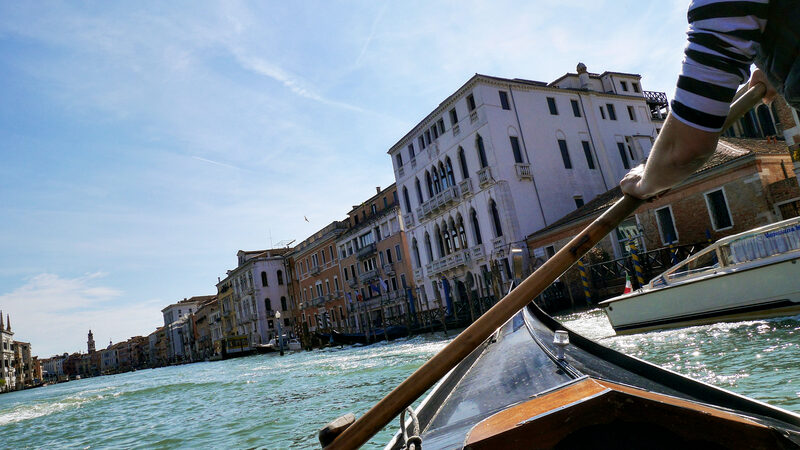
The Public Gondola Service
Traghetto
A traghetto (which means "ferry" in Italian) is a large, unadorned gondola used to cross Grand Canal at designated points.
The crossing is a quick, no-frills experience that costs just €2 for tourists - making it the cheapest gondola ride available.
Venetians traditionally stand during the crossing, making it a fun way to test your balance - but if you prefer, there are seats along the sides of the vessel.

One of the two oarsmen stands at the front to help steer the large gondola
Popular traghetto crossings
Back when Rialto Bridge was the only way across the Grand Canal, there were dozens of these gondola ferry routes. Today, only a few remain and these 4 routes are perhaps the most reliable:
San Tomà - Sant'Angelo
Located halfway between Rialto Bridge and Accademia Bridge, this is a popular route for crossing between Dorsoduro and San Marco.
Santa Sofia - Rialto Market
This is ideal if you want to avoid the chaos at Rialto Bridge and simply need a quick crossing from Ca' d'Oro to Rialto Market.
Giglio - San Gregorio
A quick crossing from San Marco to the eastern tip of Dorsoduro, near the iconic La Salute.
Dogana - Vallaresso
Because it's located at the mouth of the Grand Canal, this is the longest traghetto crossing, connecting Punta della Dogana to a dock 2mins away from Piazza San Marco.
Spotting a traghetto crossing
The small wooden piers along Grand Canal where the large gondolas dock are marked with a distinctive green banner, and nearby buildings have signs reading "Traghetto" to guide you there.
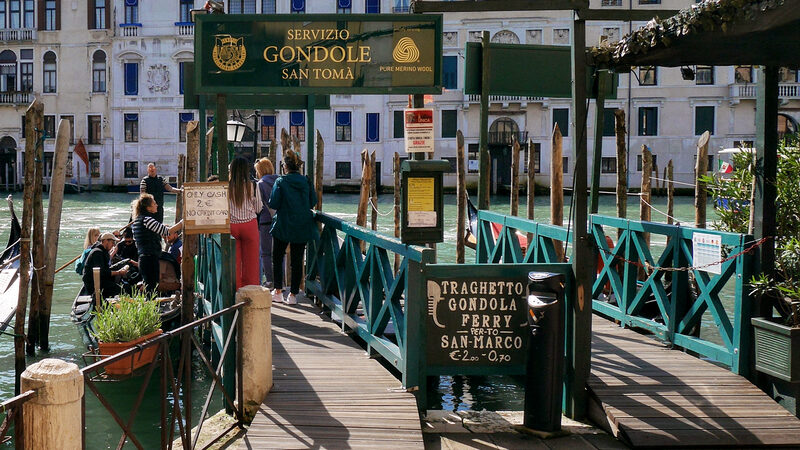
San Tomà traghetto dock
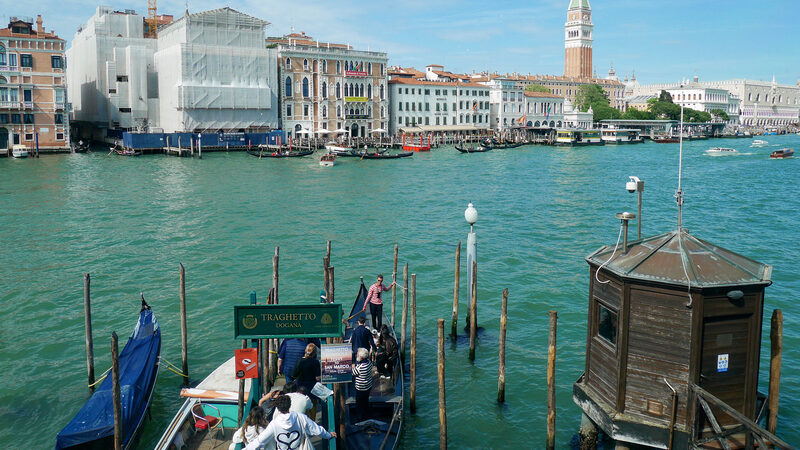
And the dock at Punta della Dogana
Traghetto schedule
The service hours shouldn't be taken too literally, as they're not always strictly followed.
Boats typically shuttle back and forth with only a few minutes' wait, from 8-9 a.m. until around 6-7 p.m. There are occasional breaks, especially around lunchtime.
More info on Città di Venezia website
Things to consider
Payment is only accepted in cash, preferably in coins.
You cannot board with a wheelchair, stroller, or heavy luggage.
They might not leave right away, especially if there aren't many people waiting, so be prepared for a few minutes' wait.

Though still rare, women can also be gondoliers
Other ways to cross the Grand Canal
If you're prioritizing practicality over experience when crossing the Grand Canal, take vaporetto line #1. It zigzags along the canal, crossing from one bank to the other at nearly every stop.
This is especially convenient if you have a water bus day pass, which gives you unlimited rides not just along Grand Canal, but across the entire vaporetto network.
Your questions, answered
Below, you'll find answers to the most frequently asked questions about the traghetto.
Can I pay by card?
No. Traghetti don't have card readers, so you'll need to pay in cash, preferably with exact change.
Do I really have to stand up during the ride?
No. Traditionally, Venetians stand to maximize space, but visitors are welcome to sit on the wooden rim or the small benches if they prefer.
Why isn't my traghetto leaving?
Traghetti usually wait until there are enough passengers before departing, but the wait is typically no more than a couple of minutes.
Find your Venice
Tailored picks to match your travel style, mood, or interests.