Castello
Santi Giovanni e Paolo
Venice's Gothic Pantheon
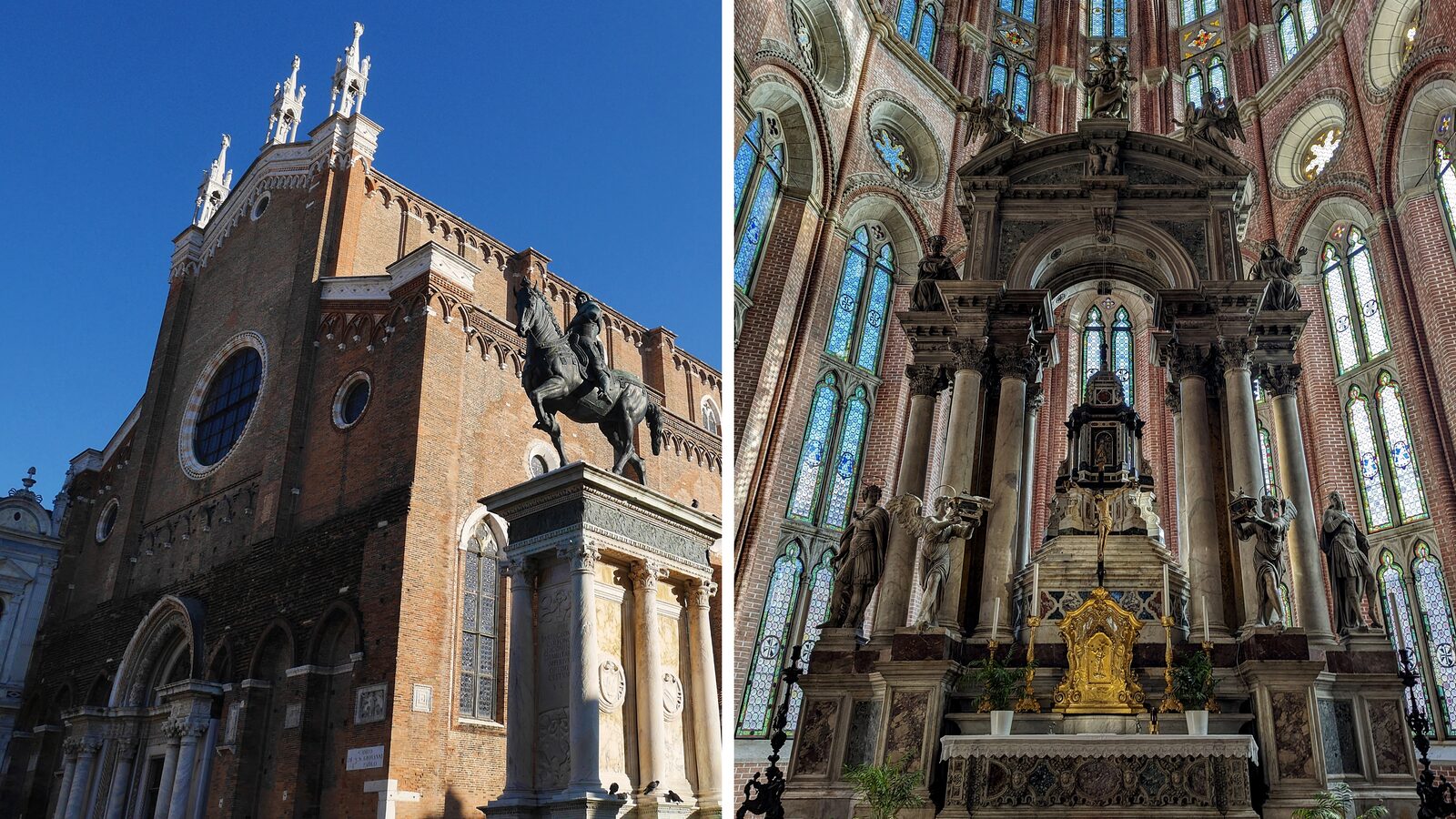
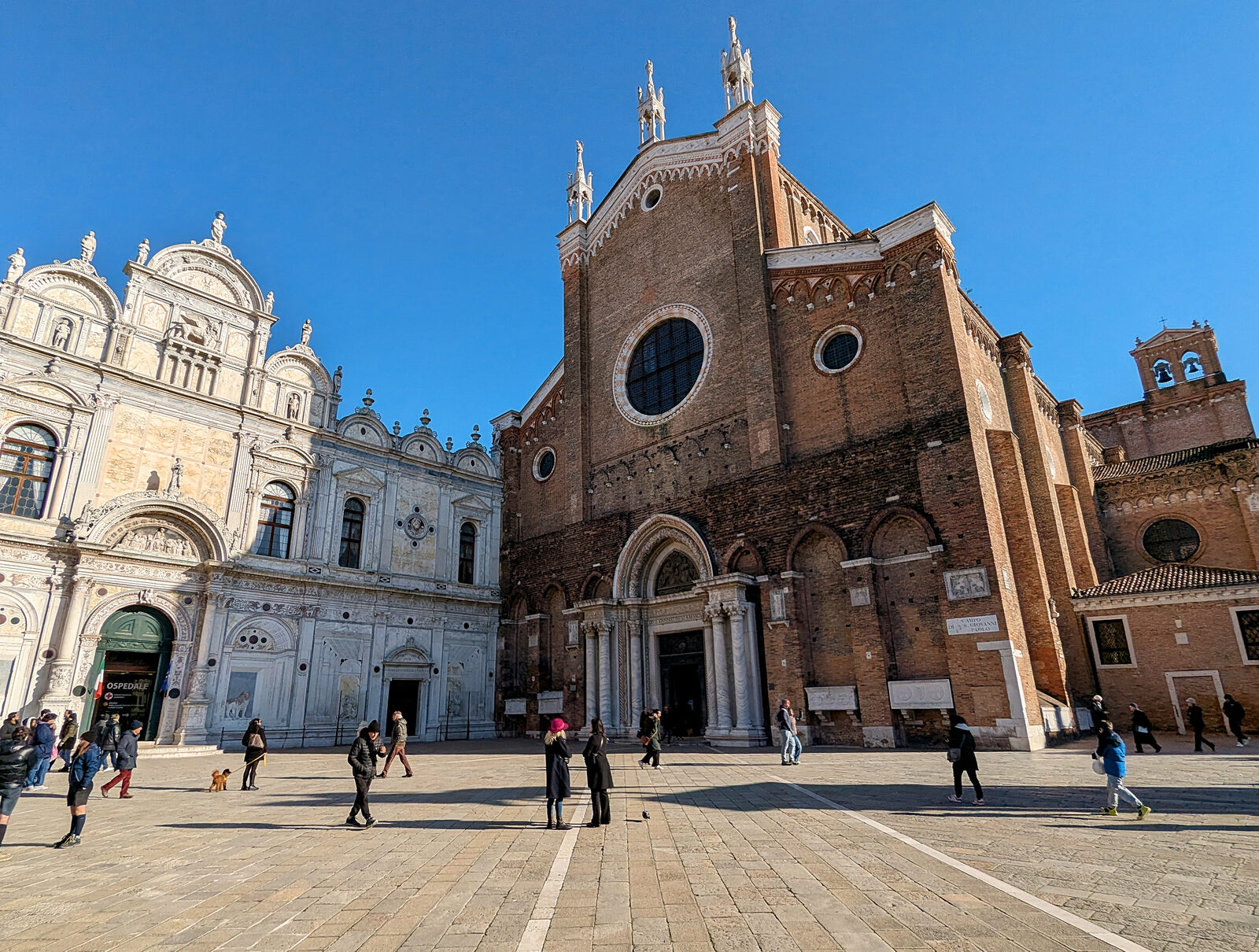
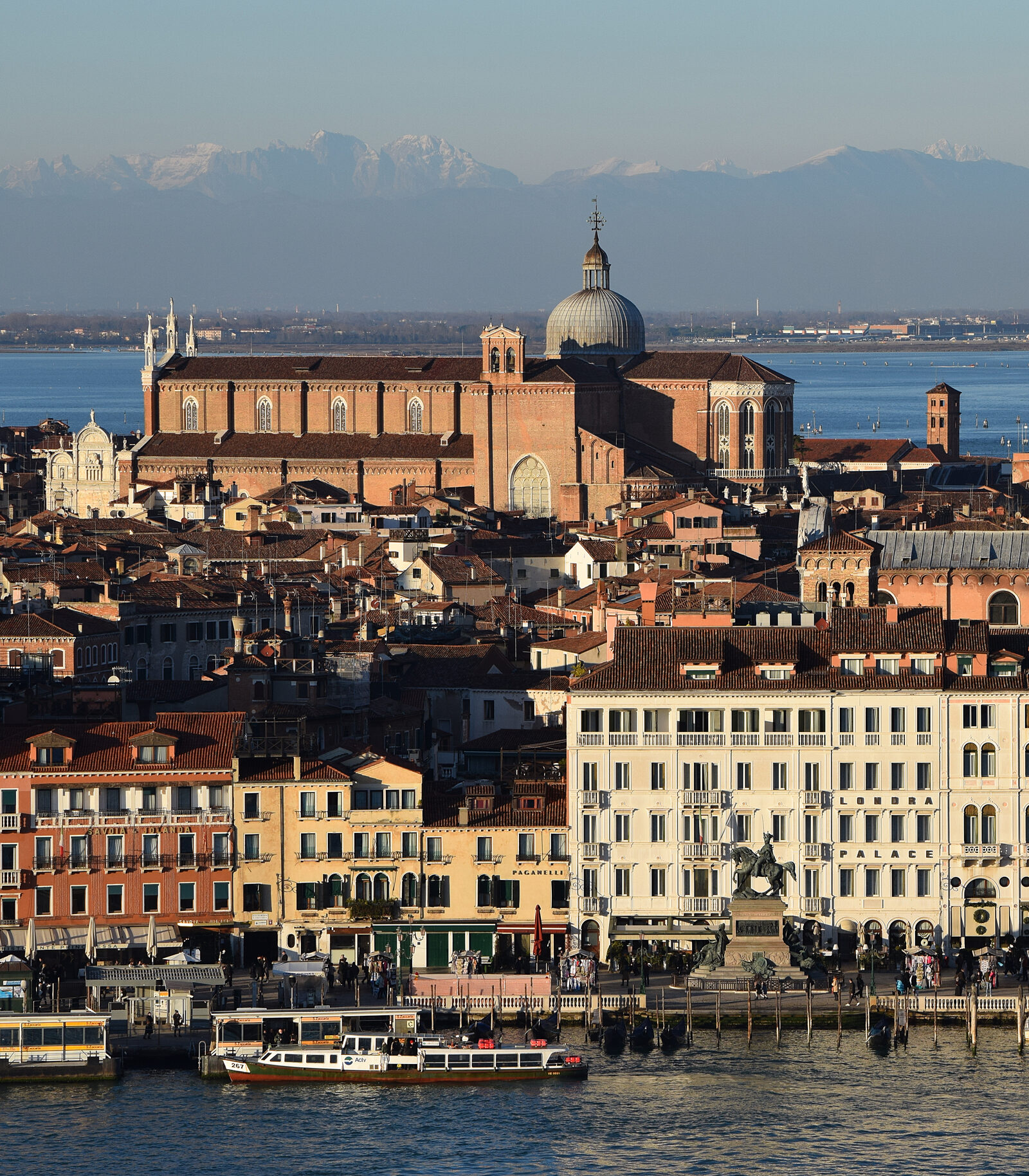
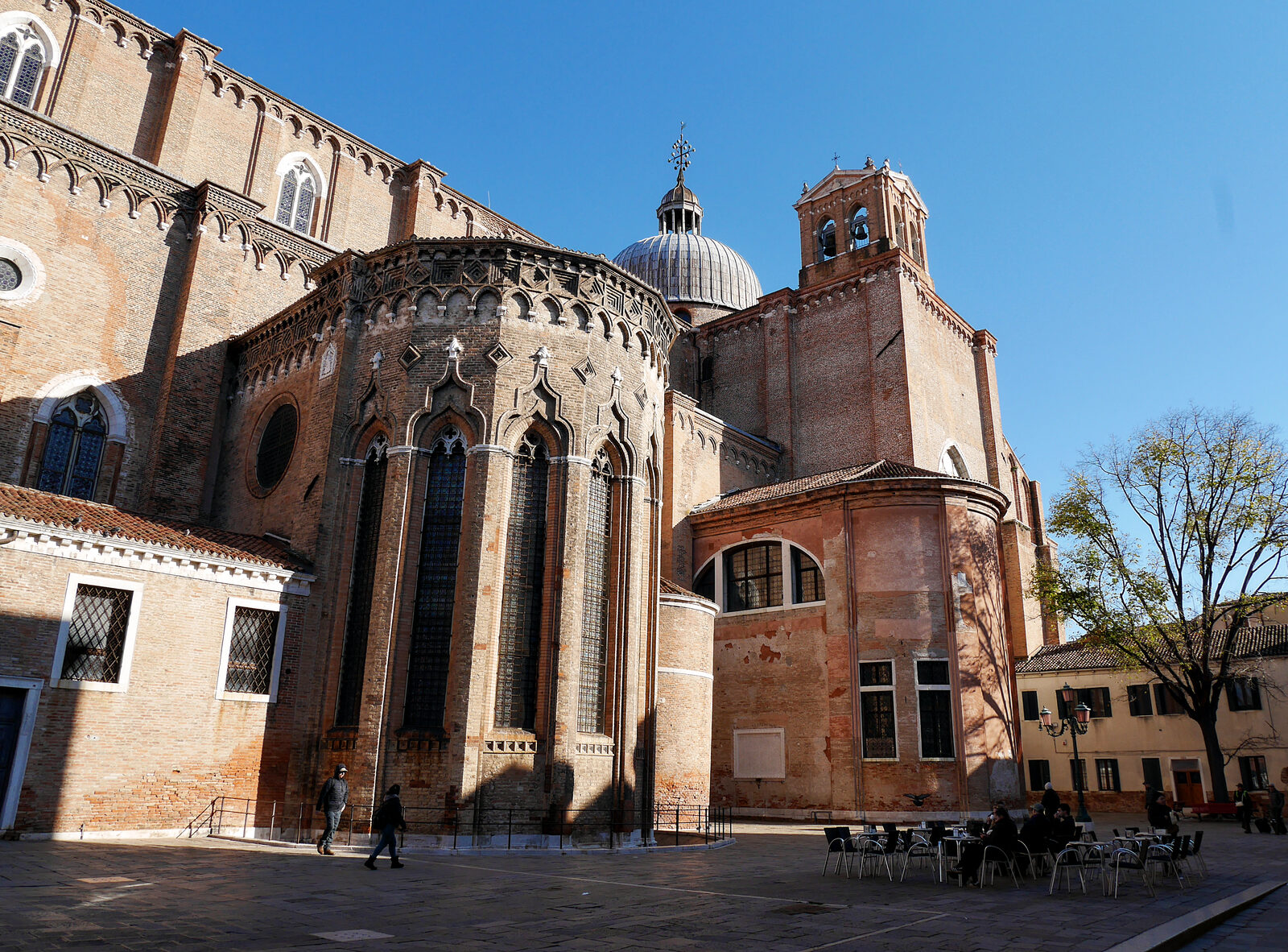
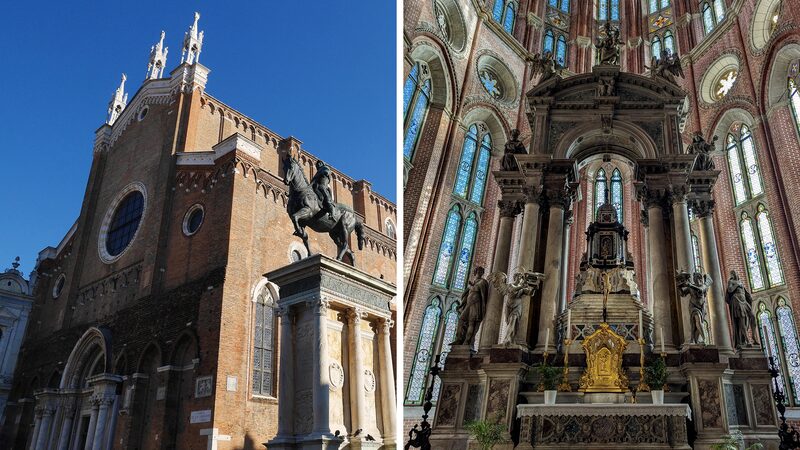
Venice's largest church, known locally as San Zanipolo, is a vast Gothic masterpiece filled with the grand tombs of the Doges who shaped the Republic's history.
Ospedale + 9-min walk
www.santigiovanniepaolo.it
+39 041 523 5913
Admission is €3.50.
Additional resources
What makes this place special
The Pantheon of Venice
For centuries, San Zanipolo served as the burial place of Venice's rulers. 25 Doges rest beneath monumental tombs, making it one of the city's most historically significant churches.
A breathtaking sense of scale
The nave rises 33 metres (108 feet), creating a remarkable sense of interior space that's rare in Venice.
Monumental funerary art
Among the church's many elaborate tombs, that of Doge Pietro Mocenigo stands out. Sculpted by Pietro Lombardo and his sons, it features 15 life-size marble figures celebrating the Doge's military achievements.
A rare treasure of Venetian glass
Despite Venice's fame for glassmaking, large stained-glass windows are surprisingly rare in the city's churches. The colourful Gothic window in the south transept is a remarkable exception, with vibrant Murano glass and intricate details that make it one of the basilica's most distinctive treasures.

Discover more about Santi Giovanni e Paolo through 18 photos with explanations.
Open galleryWhat to experience here
- Take in one of Venice's most imposing interiors, with its soaring Gothic nave and seemingly endless columns.
- Admire the monumental tombs of the Doges and the stories carved into their marble monuments.
- Discover masterpieces by Venetian painters such as Bellini, Veronese, and Lorenzetti.
- Seek out the colourful Gothic stained-glass windows in the south transept, among the finest surviving examples of their kind in Venice.
- Enjoy the peaceful atmosphere, a welcome contrast to the crowds around Venice's main sights.
What's that other magnificent facade?
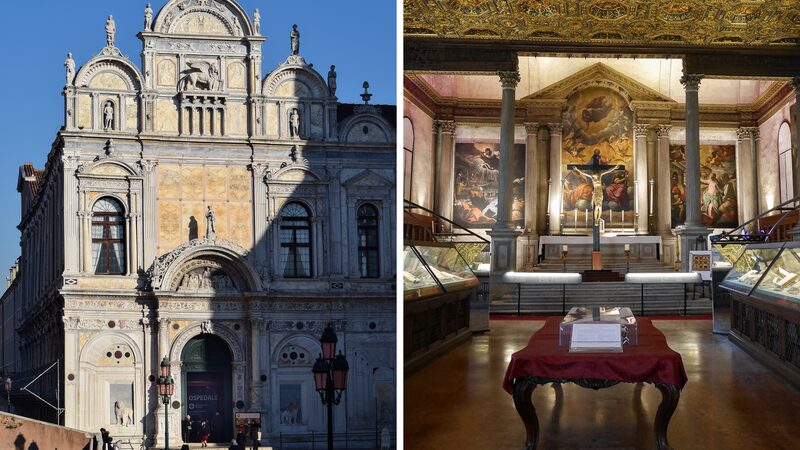
Beside San Zanipolo's simple brick exterior, the richly sculpted white marble facade of the adjacent Scuola Grande di San Marco almost steals the show.
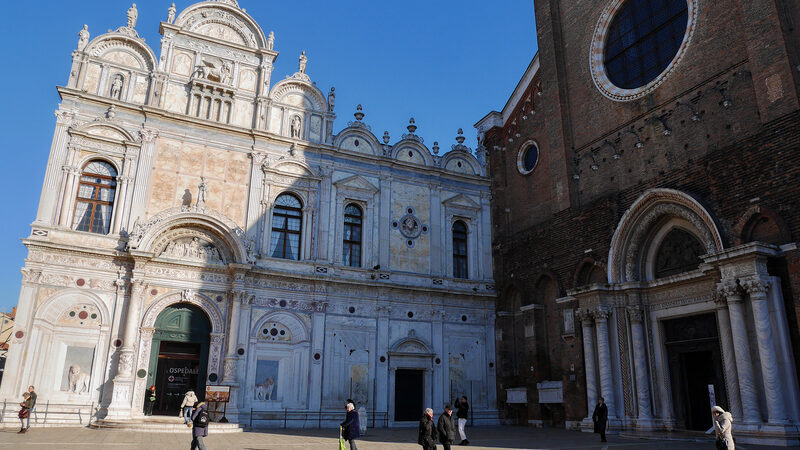
Spectacular statues of fantastical creatures adorn the upper levels, while the ground floor stands out for its trompe-l’œil archways and portals, crafted from an array of coloured marbles.
And to think, this is now the entrance to Venice's hospital: arguably one of the most beautiful hospital entrances in the world.
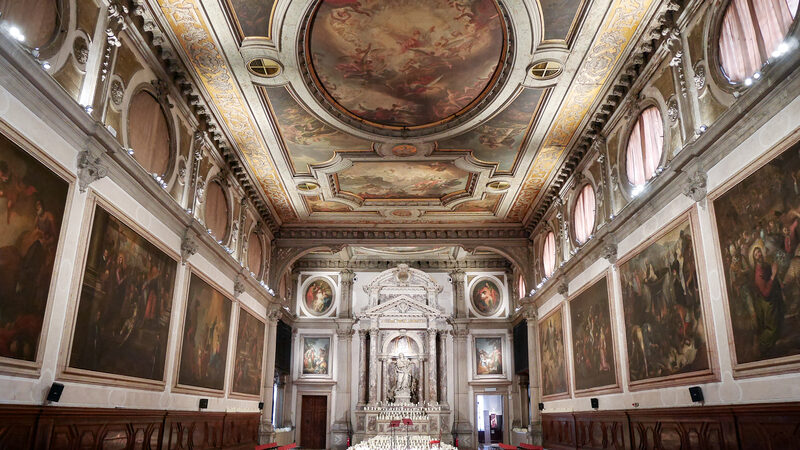
While the ground floor of the former Scuola Grande serves as the hospital entrance, you can visit the upper Chapter Hall, with its gilded ceiling and monumental original canvases.

The hall also houses a museum of antique medical books and historical medical instruments that offer a fascinating glimpse into the history of medicine (and leave you grateful that many of these tools are no longer in use).
Following Veronese in Venice
San Zanipolo offers one of the best introductions to Paolo Veronese's art, with his dramatic ceiling paintings in the Chapel of the Rosary among the church's highlights.
Take a moment to admire the ethereal light radiating from the Christ child in The Adoration of the Shepherds, and notice how it softly illuminates the faces of the surrounding figures.

But San Zanipolo was once home to another of Veronese's great masterpieces: the monumental Feast in the House of Levi.
Painted as a Last Supper scene, it soon became controversial when the Inquisition questioned the inclusion of figures such as dwarves and animals, forcing Veronese to change the painting's title.
The huge canvas now hangs in the Accademia Galleries, where standing before it feels almost like being pulled into the lively chaos of the banquet itself.

In fact, Veronese's own life was not without controversy.
According to legend, he was fleeing murder charges in Verona when he found sanctuary at San Sebastiano.
He went on to spend the next 30 years transforming the church with breathtaking works of art.

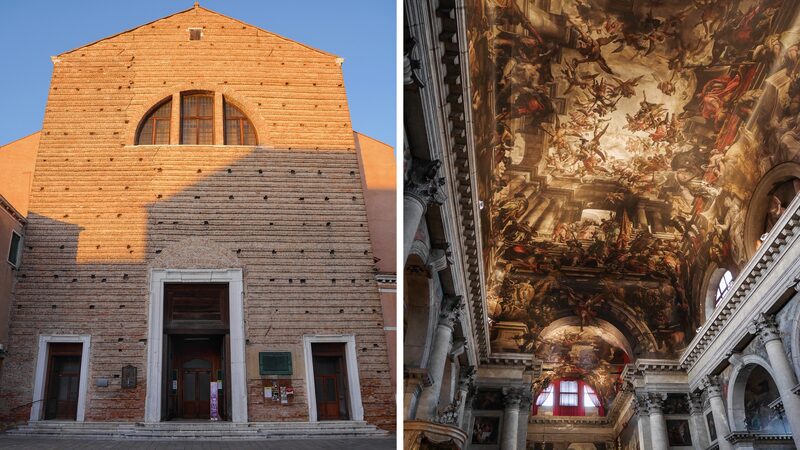
The painted ceiling is particularly spectacular, and with free admission, there's little reason not to step inside.
How everything is connected
As you explore, it's always fascinating to discover the connections between different parts and events of Venice, and this place is no exception.
Gothic rivals
Venice's other Gothic giant, the Frari Basilica, reflects the architectural rivalry between the city's Dominican and Franciscan orders.

Slightly smaller than San Zanipolo, it matches its sense of scale while offering a completely different collection of treasures: from Canova's striking pyramidal tomb to Titian's magnificent Assumption of the Virgin and a wooden choir found nowhere else in Venice.
From a marble tomb to a marble church
After admiring Pietro Lombardo's intricate work on Doge Pietro Mocenigo's tomb, discover his greatest Venetian creation: Santa Maria dei Miracoli, a beautiful small church often called a 'Renaissance jewelry box' for its exquisite polychrome marble.

According to legend, the marbles were creatively repurposed from leftover materials from the construction of St. Mark's Basilica.
Admission is free here too, as it is at all the beautifully curated churches on the Chorus Circuit.
What to see nearby
These attractions are within walking distance of Santi Giovanni e Paolo:
super close
Scuola Grande di San Marco
tops 5 mins
Libreria Acqua Alta
tops 5 mins
Santa Maria dei Miracoli
tops 5 mins
Campo Santa Maria Formosa
tops 5 mins
Palazzo Grimani
5-10 min away
San Giacomo di Rialto
10-15 min away
San SalvadorMore places like this
Inspired by Santi Giovanni e Paolo? Discover more hidden gems away from Venice's busiest hotspots